
As we look forward to the snow and cold weather abating, we are anticipating green growth, colorful blooms, and stepping outside to sunshine and warmer temperatures. With this shift in the seasons, our bodies adapt to temperature differences and metabolism changes. Our body is adjusting from the dry air of indoor living to the fresh air of the outdoors. Not only that, our bodies store fat in the cold winter months and needs help stimulating metabolism and lymphatics once again to release that unnecessary accessory in the warmer months to come. The lymphatic system requires stimulation to help in detoxification, immune system health, and replenishment of nutrients and fluid in the tissues. Two of my favorite cooling and moistening springtime herbs are important in aiding these transitions.
The lymphatic system consists of lymphatic vessels and capillaries that help to remove cellular debris and pathogens while regulating fluid balance and transporting fatty acids and fats from the digestive system. It also transports white blood cells to and from the lymph nodes which in turn helps to fight infection, damaged, or abnormal cells in the body. By stimulating this system, your body has a better chance of preventing and fighting cancer as an example. It is responsible for the absorption of fats and fat-soluble vitamins and transporting it back to our circulatory system. We are usually less active in the cold, winter months than we are when warmer temperatures arrive. The flow of lymph is increased by movement and increased breathing. It’s understandable that exercise is important to move the lymph system. It can also be stimulated by the use of certain herbs.
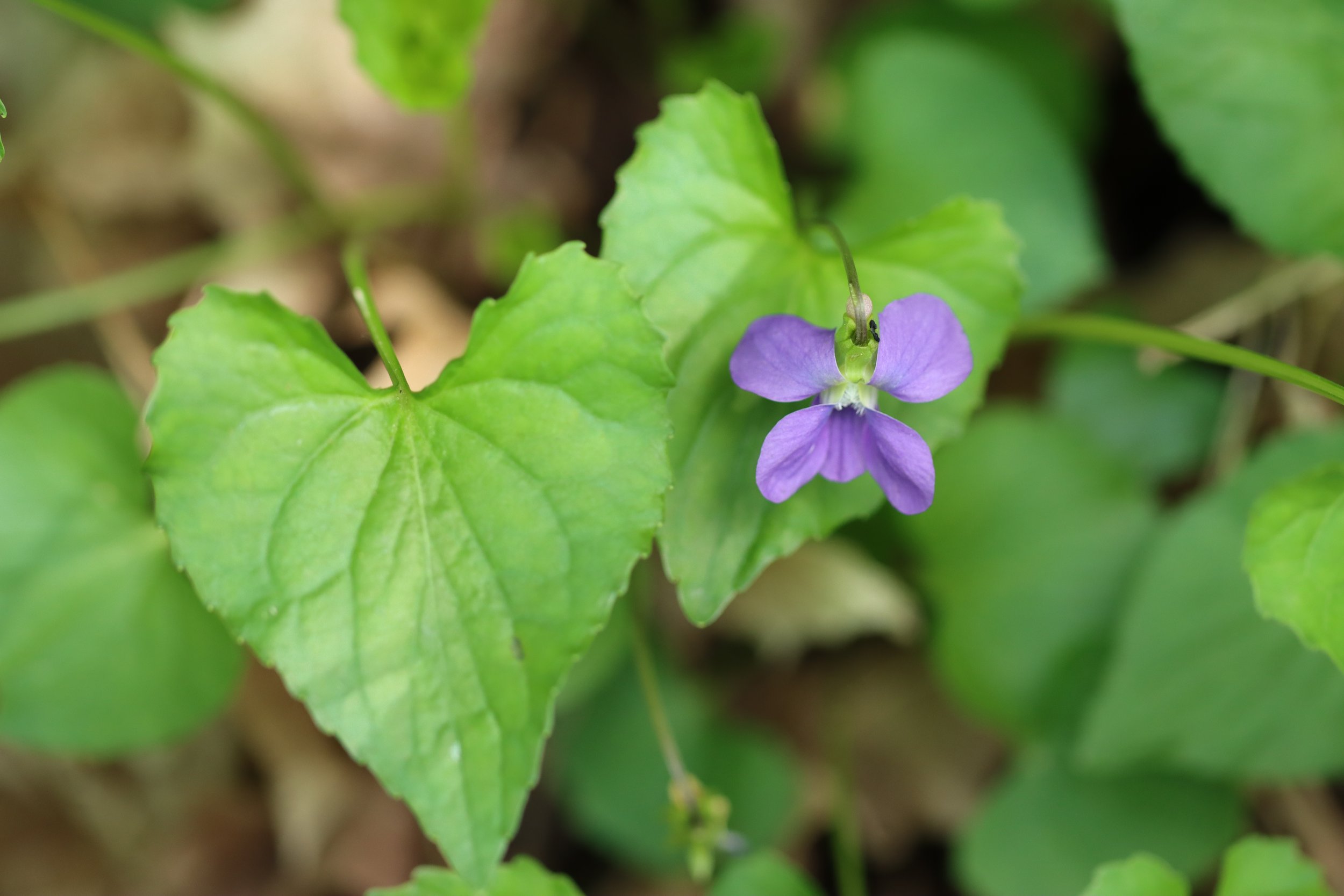
Blue violet (Viola odorata) is a common edible herb found blooming in the early to mid-spring season. The heart-shaped leaves are easily identifiable along with the blue-violet petals held on a single stem. It is not uncommon for my family to find me sitting in the field picking violet leaves and flowers for medicine making. It is also a well-known fact that this herb is one of my favorites! Violets contain mucilage which is a substance in the plant world that resembles a gel when mixed with water. If you crush the leaves, you will feel a moistening or slimy texture when you rub your fingers together. This moistening mucilage is healing on many different levels. As a poultice placed on the skin, it will help repair tissue while soothing any irritation. It is considered cooling and moistening and is best used in heated or dry tissue states. After a long winter season, the body appreciates the extra moisture both internally and externally. Traditionally, this mucilage also contributes to the herb’s anti-inflammatory, expectorant, emollient, and demulcent actions. Not only does it repair tissue externally it can help repair mucosal membranes internally as well. You will see violet leaves and flowers recommended for coughs, sore throats, constipation (great for children), and inflammation. This is also a great lymphatic supporting herb along with being a gentle nervine.
Water is the best extraction process used with violet. Fresh or dried leaves and flowers can be used, but fresh is best. To make an infusion with the fresh leaves, it is best to perform a cold infusion by letting the leaves steep in cold water overnight (crush them first) and then strain in the morning. Drink this up to 3 cups a day. You can also make a juice of the herb (to be used externally or internally) by grinding the leaves and flowers and place them in a cloth to express the juice. Add a small amount of alcohol (1/3 the amount of juice) to preserve this. This preparation can be taken by adding 20 – 30 drops in a small amount of water up to 3 times a day. A concentrated preparation can be made by low boiling the leaves for ½ hour, strain, and then heat to reduce the volume by ½ the amount. You can then make a fomentation by dipping a cotton cloth in this concentrated preparation and placing while warm on the affected area. This works well for swollen glands or skin rashes. You can also make a soothing oil or salve if desired. The only precaution with Violets is that it can be emetic in large doses taken internally. Do not confuse the Viola species with African Violets!! They are not the same species and are not edible!
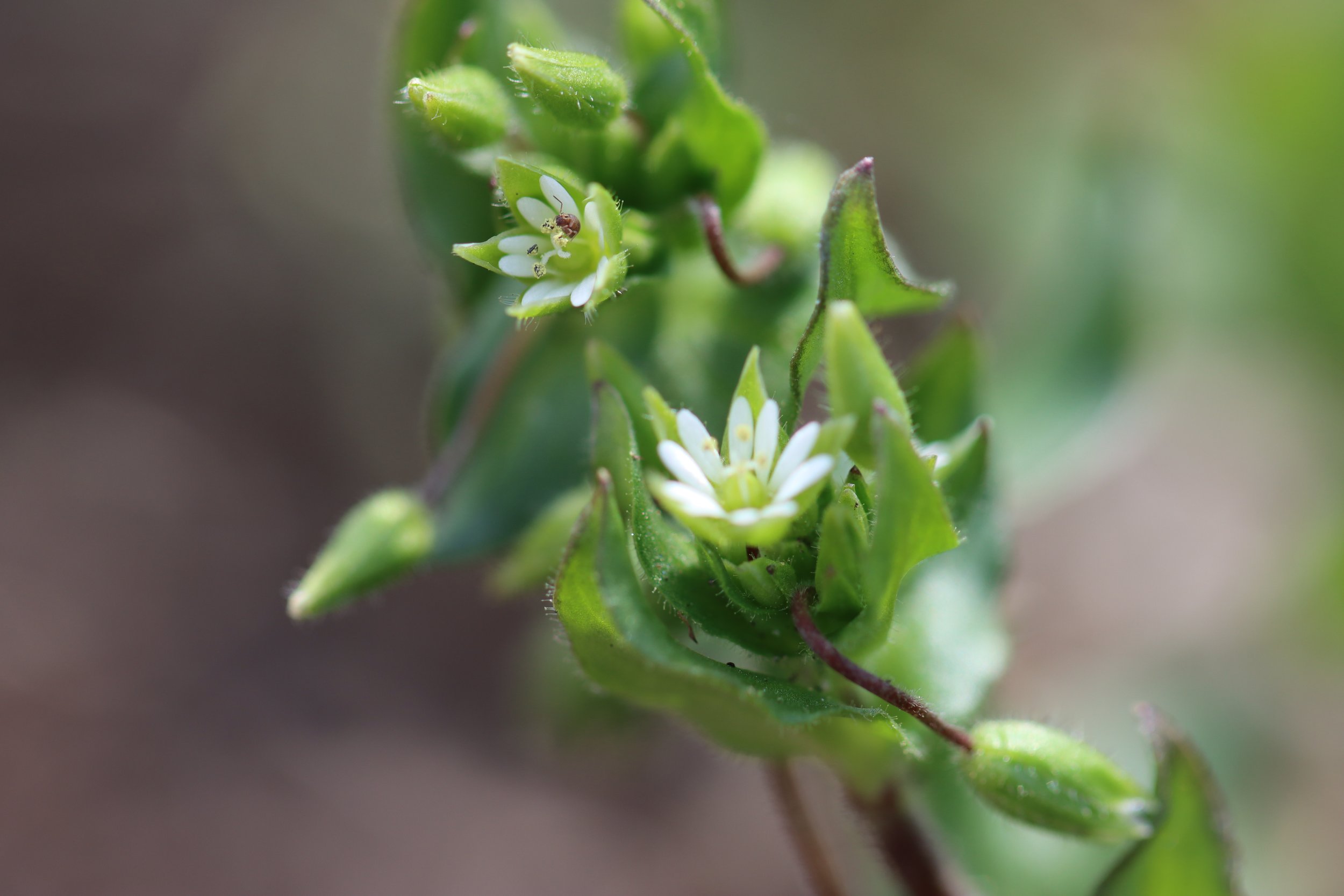
Chickweed (Stellaria media) is another edible lymphatic and mucilage-containing herb that grows everywhere in the spring. You will mostly find it in disturbed areas of gardens, lawns, meadows, and trails. This low-growing “weed” is small and delicate and takes close inspection to identify. The stems are either green or purple with small white hairs on one side only. This is how you can determine that your plant is a true Stellaria media. Other plants called “Chickweed”, or similar plants do not have these hairs growing in a row up one side of the stem. The small, white flowers are very noticeable because of its “star” shape. There are only five petals, but it looks like there are ten because each petal is deeply cleaved in two which gives the appearance of more petals. This is one of the traditional “spring tonics” because of the many nutrients it contains along with the blood purifying (or alterative) actions it has on the body. It affects the process of elimination from many channels including the lungs, liver, kidneys, and lymphatics. Chickweed contains the flavonoid Quercetin, which also helps to prevent allergy symptoms by preventing the release of histamine. Springtime allergies could benefit from its use. It works best when eaten daily before symptoms appear. It also contains saponin glycosides that help the body to absorb nutrients while dissolving and breaking down bacteria, excess mucous, and excess fat cells. The nutrients it contains work to help stimulate and increase the function of metabolism while the alterative properties and saponin content help to rid the body of excess mucous and waste. All of these actions are good reasons to find some chickweed this spring.
It is best to use Chickweed fresh because it can lose some of its potency once dried. However, you can make an infusion with the dried or fresh herb (anything above the soil) by pouring one cup of boiling water over two teaspoons of Chickweed and steeping thirty minutes. Harvest the herb just before and during the flowering stage for drying. You can preserve the fresh herb also by juicing the herb and then freezing it in ice cube trays. Chickweed is considered a safe herb for all in recommended doses. Dosages are up to 3 cups daily of the infusion, and 2-4ml of the fluid extract or tincture up to three times a day when needed. You can eat Chickweed daily by adding it to one meal a day by mixing it with your next smoothie, salad, or soup. It is easier to eat chickweed if you chop up the stringy stem first. Chickweed pesto is one of my favorite recipes to enjoy! Here is one of my favorite recipes from Learning Herbs:
Keep in mind that there are many different herbal preparations that can be made with both of these herbs. Vinegars, baths, salves/oils, infusions, tinctures, poultices, fomentations, capsules, and juicing are common ways of making them into medicine. The cooling and moistening properties along with the lymphatic actions of each make valuable resources to grow on your land or to have in your cupboard.
